Working Without Knowing: Art, Risk and the Creative Process
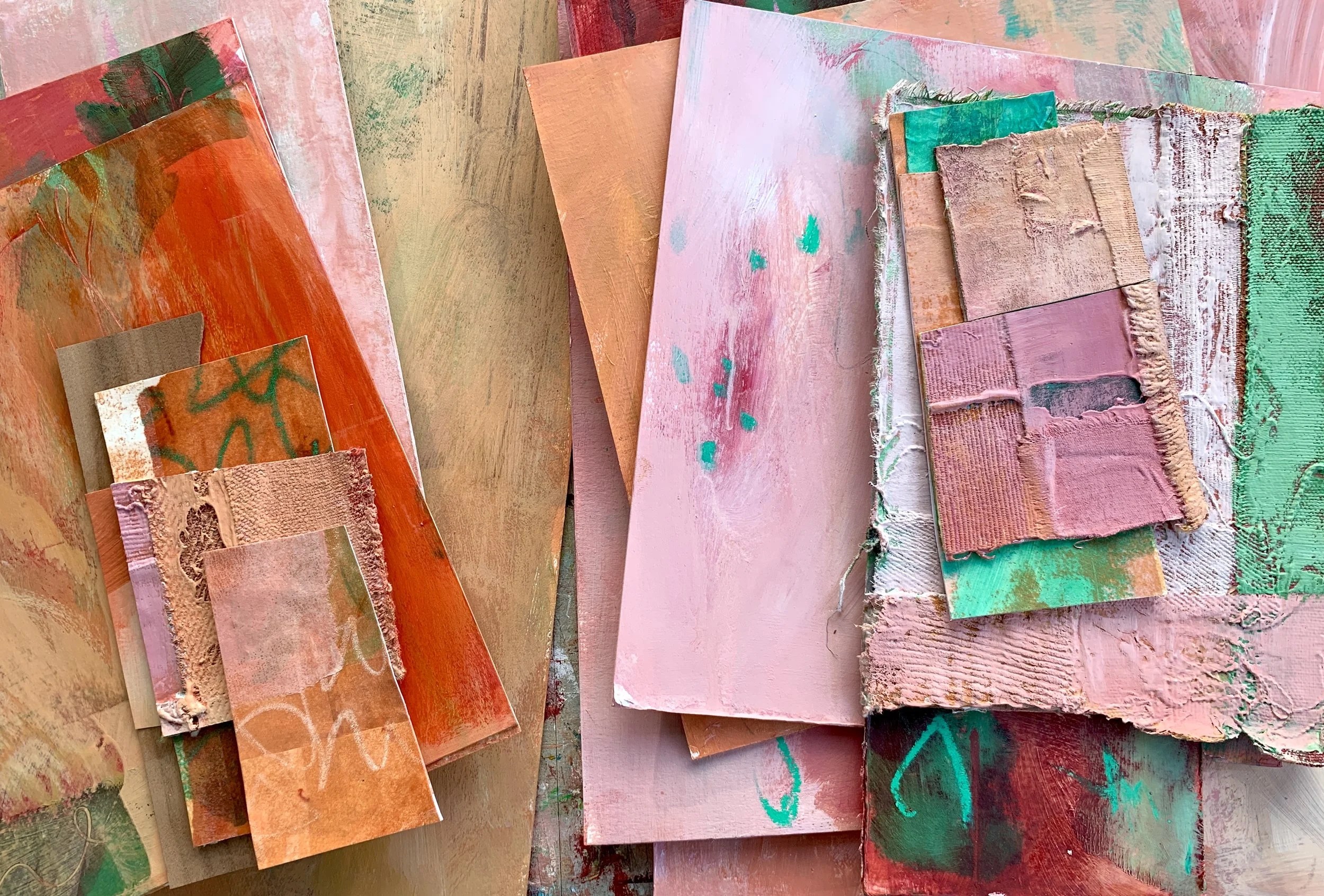
Work in progress; layering, testing and letting ideas emerge.
“Art is an adventure into an unknown world, which can be explored only by those willing to take risks.”
(Gottlieb, Rothko, Newman, 1943)
I discovered this quote a few years ago while studying for my MA in Education, and it now has a prominent place in my studio. It reminds me that we don’t need all the answers to begin. Making art can be about discovery and exploration, about allowing new ideas to emerge through the process of working.
During my MA, sharing work in progress in our group sessions often felt risky. What would the others think? Was my new work any good? Was layering paint and fabric enough? But over time, the support of the group made it easier to stay with that uncertainty.
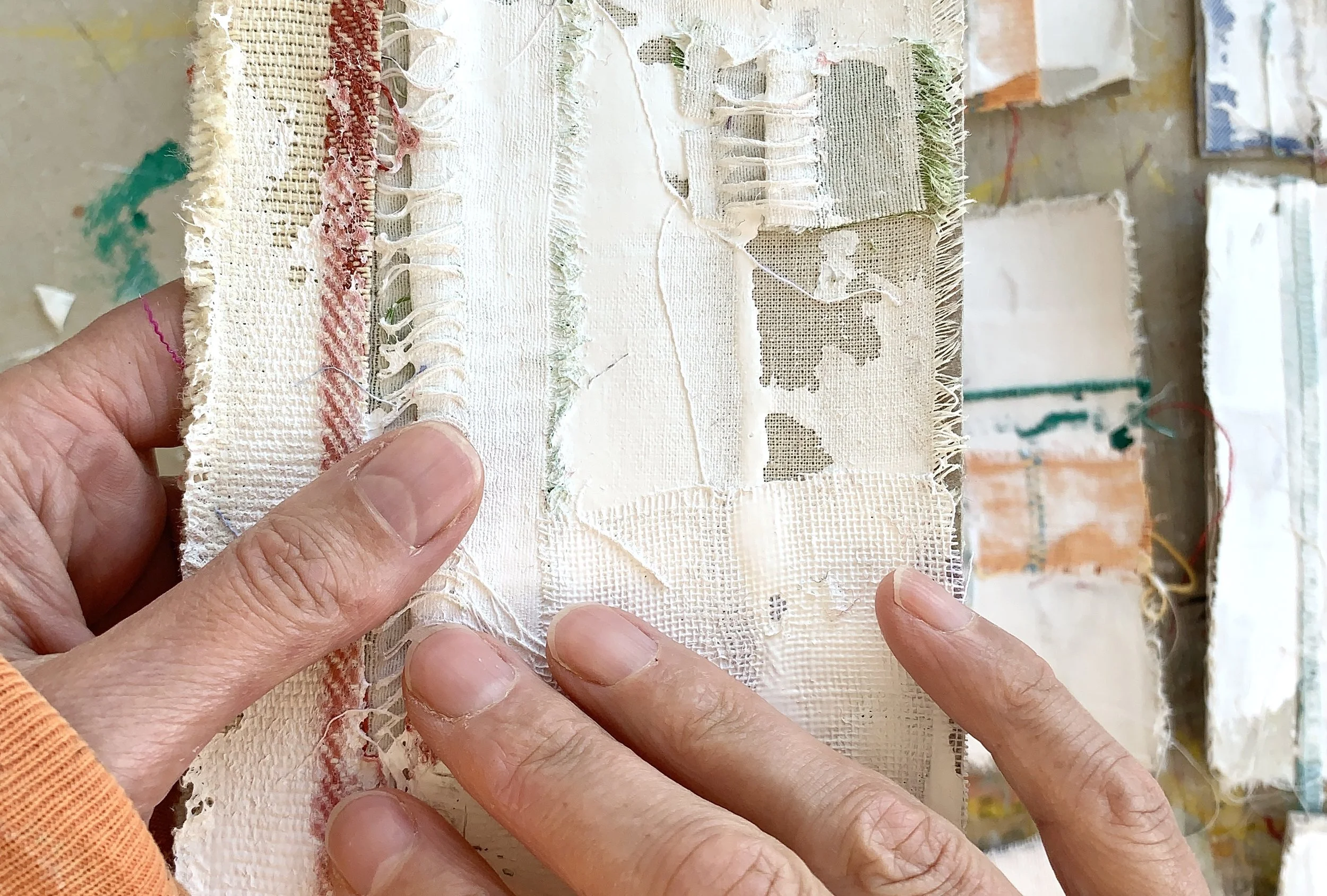
Holding something unfinished; sharing work in progress.
Early in the course we were encouraged to think about risk and uncertainty both as artists and as teachers. We talked about the vulnerability that comes with not knowing and the challenge of allowing ourselves to fail. Through those discussions and our own making, it became clear that creativity is not about eliminating uncertainty but about being willing to step into it.
How We Learn to Avoid Risk
“All children are born artists. The problem is to remain an artist as we grow up.”
Pablo Picasso
Children approach making with remarkable freedom. They experiment, play and follow their curiosity without worrying about whether the result is good or correct.
Yet through my teaching experience with both teenagers and adults I have seen how quickly this freedom disappears. Many people become cautious and self-critical in their approach to making.
Part of this comes from the environments in which we learn. Education systems and wider cultural pressures often place strong emphasis on outcomes that are prescribed, assessed and compared. In this context experimentation and failure can begin to feel risky rather than valuable.
Instead of asking What if…?, many people default to questions such as Is this right? or Is this good enough?
Over time we learn to fear mistakes and the vulnerability of getting things wrong. Perhaps you recognise this feeling in your own making. Yet these habits are not fixed. With encouragement and the right environment we can begin to unlearn them and rediscover some of the creative freedom we had as children.
In their book Art & Fear, David Bayles and Ted Orland reflect on the role uncertainty plays in making art:
“Uncertainty is the essential, inevitable and all-pervasive companion to your desire to make art. A tolerance for uncertainty is the prerequisite to succeeding”.
What Risk and Uncertainty Look Like in Practice
My MA helped me understand more clearly what uncertainty and risk taking looked like in my own creative practice.
For many years I worked in short bursts during school holidays. When I began a piece of work I often placed pressure on myself to produce something finished — usually a large painting on canvas that felt worthy of framing and exhibiting. More often than not I felt frustrated or disappointed with the result.
Gradually I realised that what I really needed was permission to make work without the expectation that it would become a resolved piece. Instead of working on stretched canvas, I began making small pieces on paper and fabric. In 2021 I started the 100 Day Project, making a small monochrome collage each day. For the first time I began to value the process itself rather than rushing towards an outcome.
During my MA we were encouraged to experiment and take creative risks. My exploration of plaster emerged from this environment. I deliberately chose to work with a material I didn’t feel comfortable with and began by asking a simple question: What if…?
What if I added fabric?
What if I broke the blocks open?
What if I printed onto the surface?
You can hear more about this exploration in my chat with Jayne Emerson creator of the No Rules Textile Society. Watch the conversation here.
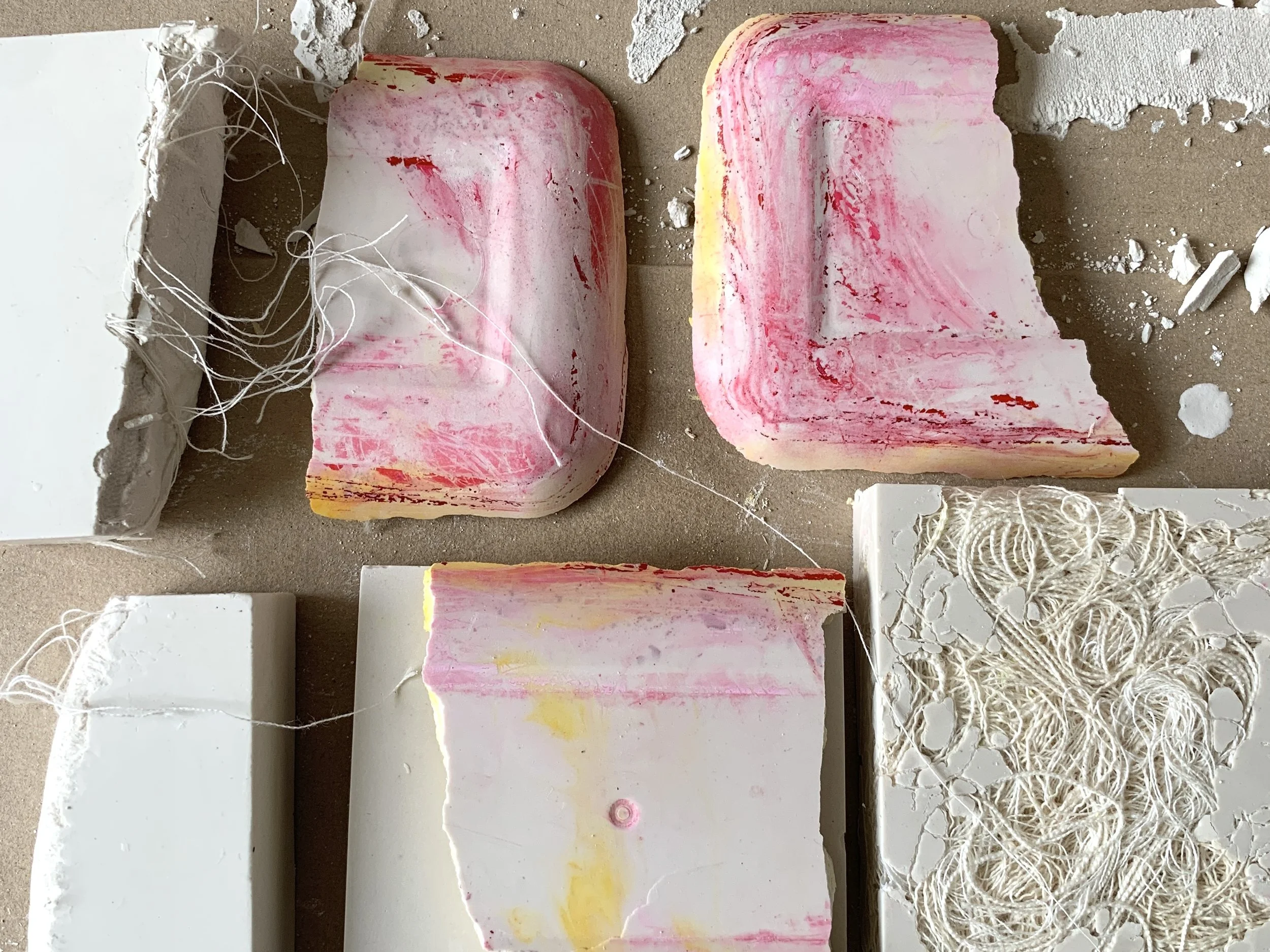
Testing materials - plaster, pant and thread in early exploration
Over time I realised that play and experimentation were not distractions from my work but actually essential to it. My work was becoming increasingly process led and material centered. I began to see uncertainty not as a problem to solve but as a necessary part of the creative process.
For me, working in this space often means:
Asking What if…?
Not judging too quickly
Allowing something to remain unfinished
Accepting awkward stages and things that don’t work
Separating making from evaluating
This last point is particularly important for me. I realised that I had developed a fast, critical way of judging my work that left little room for reflection. Keeping a studio journal now helps me recognise where I am in the creative cycle: whether I am in a stage of play and discovery, or a moment when it is time to refine and resolve an idea.
Creating a space where risk feels possible
So how do we become more comfortable working in this space of uncertainty? One important part of this is creating a sense of safety.
Through both my school teaching and my adult workshops I have seen how much difference a supportive environment can make. When people feel safe and encouraged, they are far more willing to experiment and take creative risks.
A research project I conducted explored the connection between collaboration and risk taking in the A-Level classroom. While a small number of students found collaboration anxiety-provoking, most reported feeling more confident to experiment when they were working alongside others and sharing ideas.
Creating this kind of supportive environment is something I value strongly in my adult workshops. I focus on open-ended tasks, building trust and allowing time to play so that people can explore materials without feeling that they have to get things right.
One workshop participant described the experience like this:
“I never felt I was very good at art in school and came to these classes without much confidence in my abilities. I was worried that my attempts wouldn’t be any good compared to others.
Clare’s approach to helping us learn is supportive at all stages. I have also found inspiration and support from others in the group. It definitely feels like a shared endeavour. I’m learning to enjoy the process as much as the end result”.
It is in this kind of shared, supportive space that taking risks begins to feel possible.
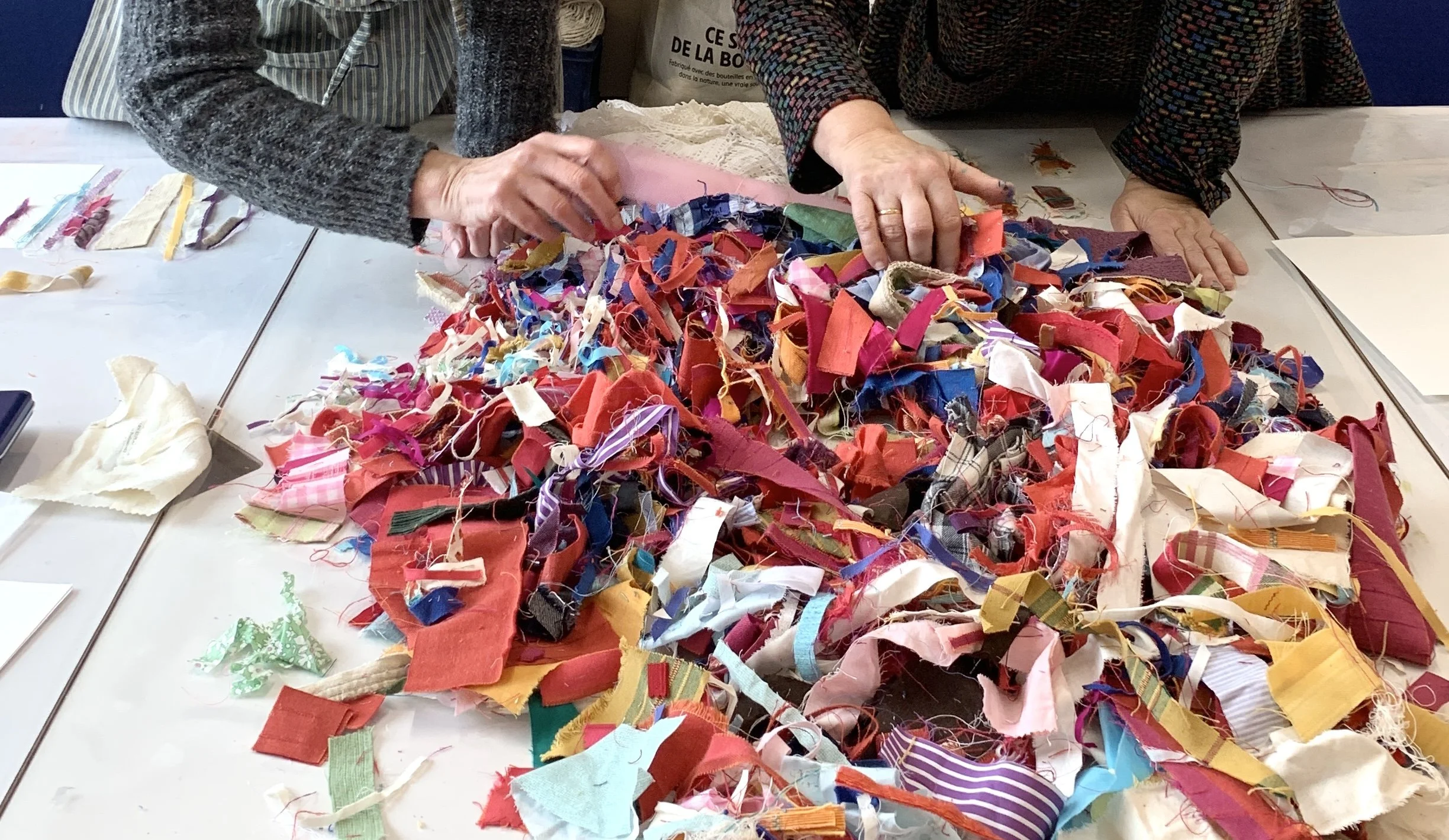
A shared space for experimentation and play.
Why I’m Doing 100 Days of Making Without Knowing
Last year I completed and exhibited a body of work that I had been developing for a long time. Now I find myself back in the exploratory stage of my practice — revisiting elements of that work, experimenting with materials and wondering how new ideas might emerge.
I am back in a place of uncertainty. And, perhaps surprisingly, I really enjoy that feeling. It carries a sense of possibility and adventure.
Rather than rushing towards finished pieces, I want to stay with this stage of play and experimentation a little longer — to make without overthinking, trusting that something interesting will eventually emerge.
The 100 Day Project offers a helpful framework for this. I’m not approaching it as a productivity challenge but as a way of creating a loose structure that allows time for exploration and discovery.
I’ve begun by working with fabric and paint and the three words: combine - cut - reconnect. With my recent trip to Marrakech still in my mind, I’ve been layering soft peachy pinks and oranges over textured fabric before cutting the pieces and recombining them as collage. Rather than planning each step, I’m responding to what I’ve already made and letting the materials guide the next move.
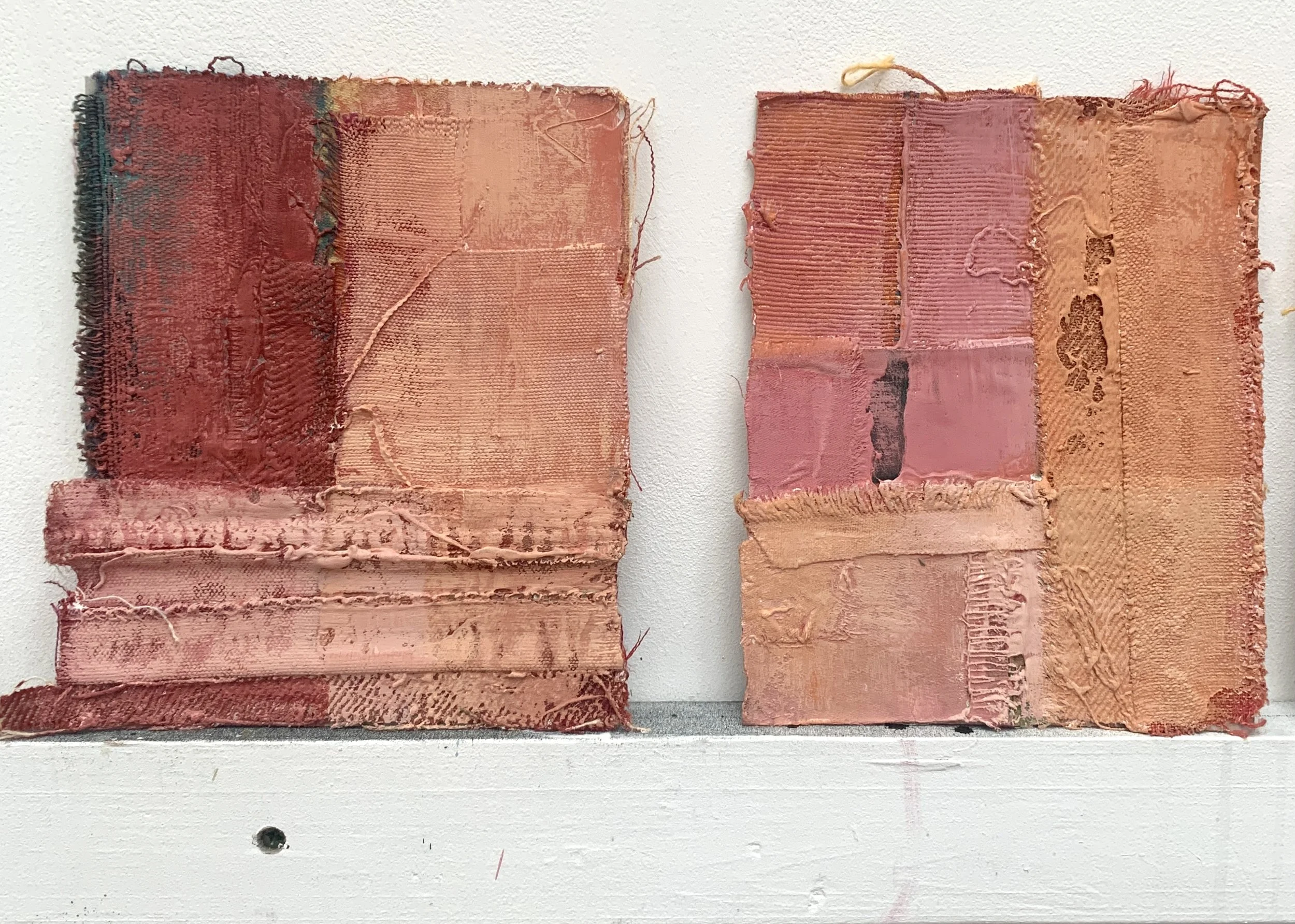
Bringing elements together, still part of the exploration
An Invitation
I invite you to reflect on your own creative practice and consider how you might create space for uncertainty.
Pause for a moment and ask yourself:
What might shift if I stayed a little longer with the not knowing or the unresolved?
If you’d like to follow how my 100 Days of Making Without Knowing unfolds, I share my progress on Instagram. There’s a link at the bottom of the page.