Earthy, ochre colours have become more prominent in my recent collection Warmer Lands. While these colours felt familiar to me from travelling, as an artist they felt new and unfamiliar. What was drawing me into these colours, and what connections was I starting to make?
We often associate places with particular colours but don't always stop to ask why. I decided to visit the Luberon valley in Provence to explore the old ochre mines and understand more about the relationship between the earth, the landscape and the colours of the architecture I have been observing and photographing for a number of years.
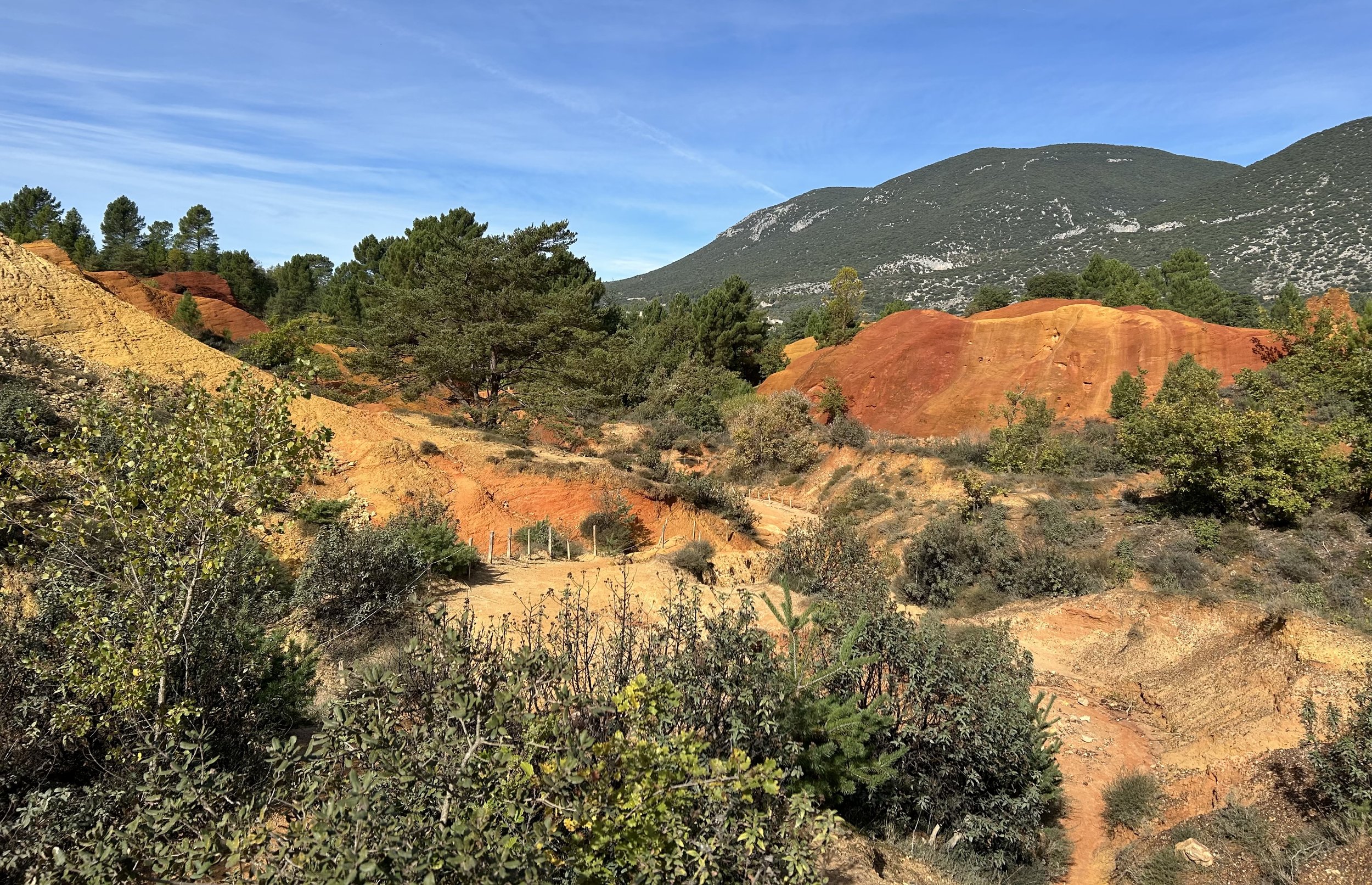
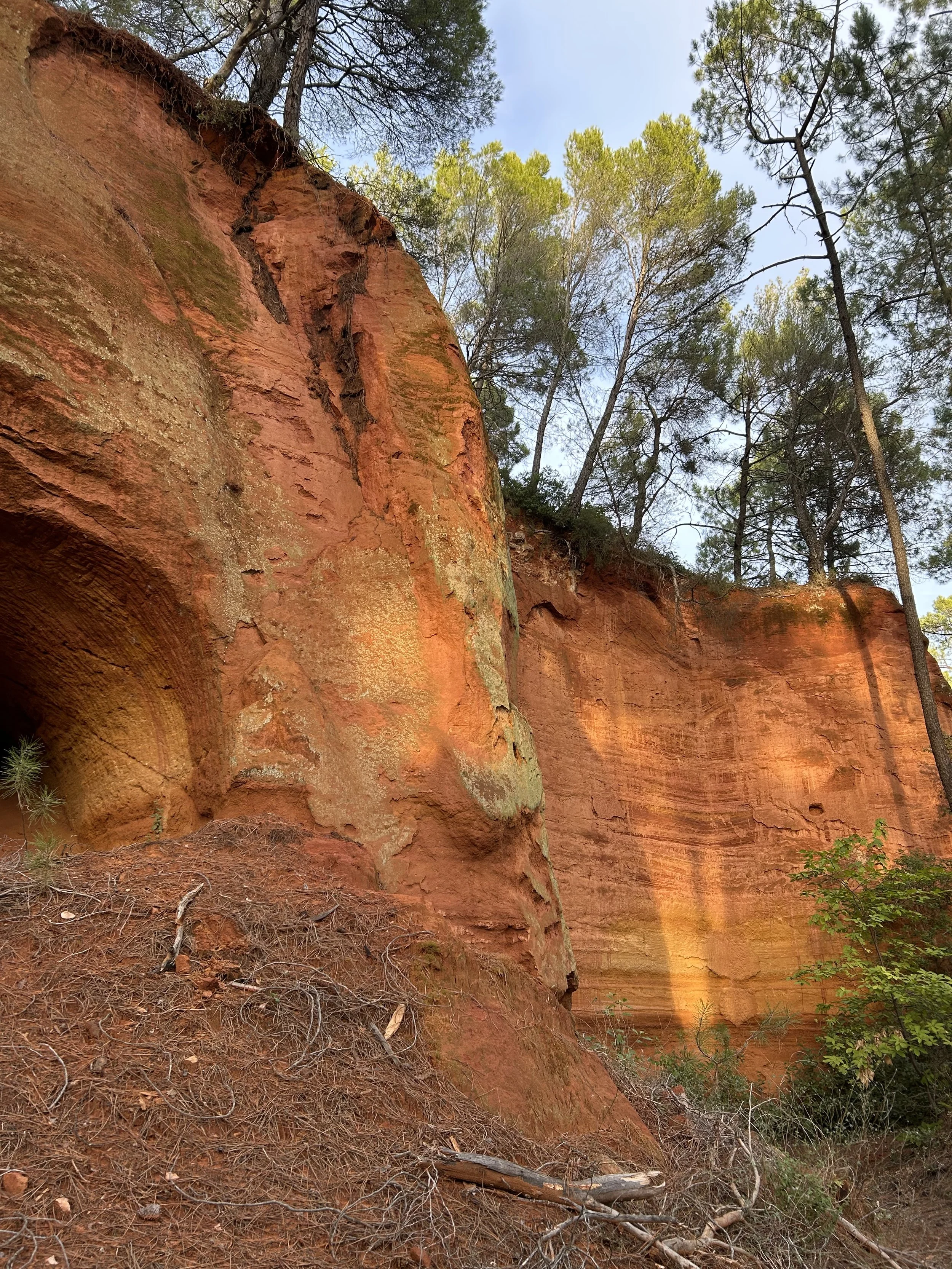
The Colorado Provencal in the Luberon valley, France.
The colours of the landscape
Walking through the landscape of the mines, created by both human activity and natural erosion, I was struck by both the intensity and subtle nuances of the colours. From deep rich reds to radiant oranges and soft yellows, nature’s palette was so rich and saturated that it almost seemed unbelievable. Despite their connection, the vast expanses of ochre landscape under strong sunlight felt different from the weathered ochres on village walls. Here, the colours seemed purer and more intense compared with the soft layered and weathered colours I have so often photographed.
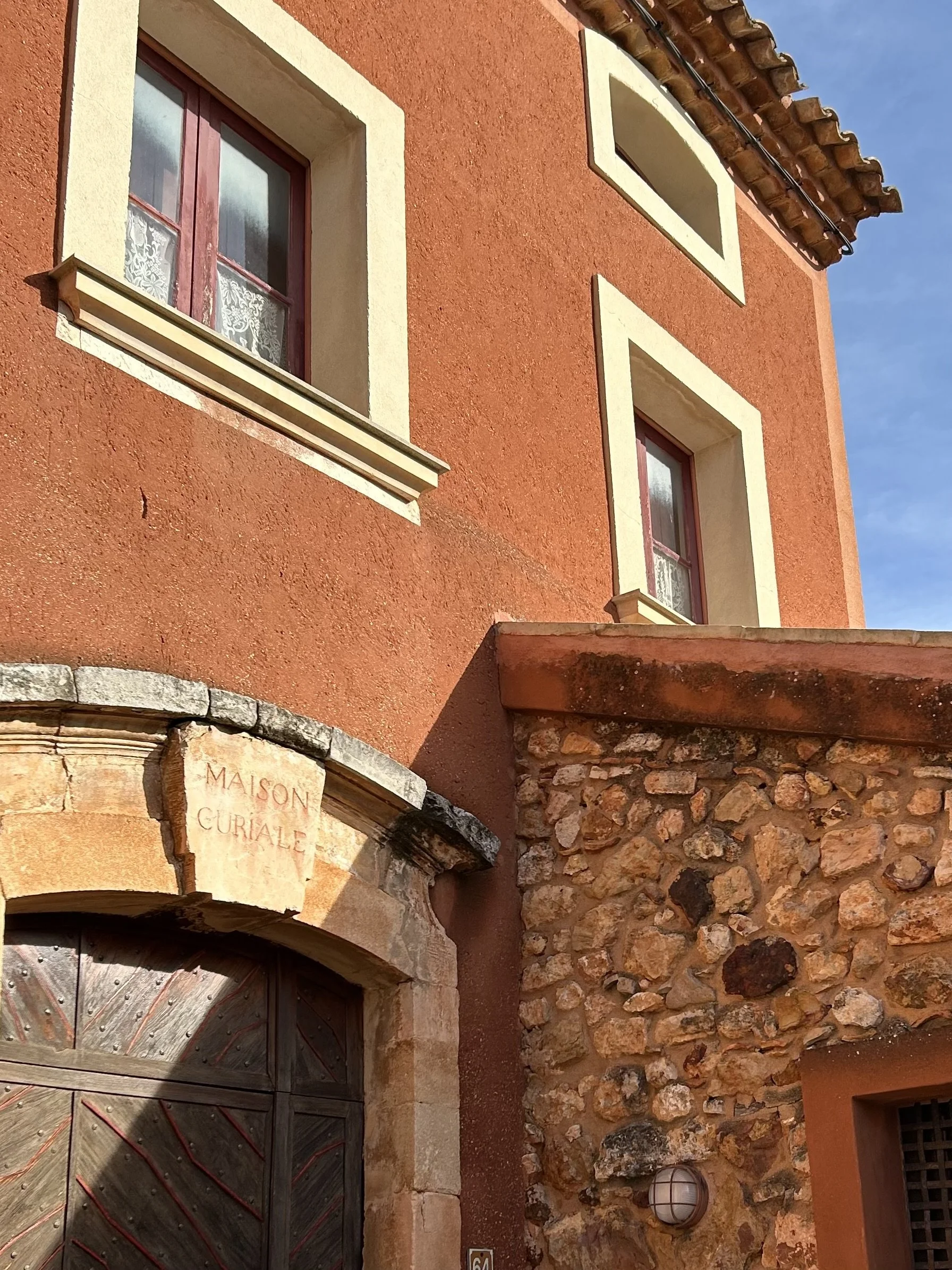
But then when I wandered around the village of Roussillon in the late afternoon sun, I saw that same intensity of colour on the walls. It was a reminder that my research is not just about colour, but light too and the way it changes how we experience colour.
The history held in colour
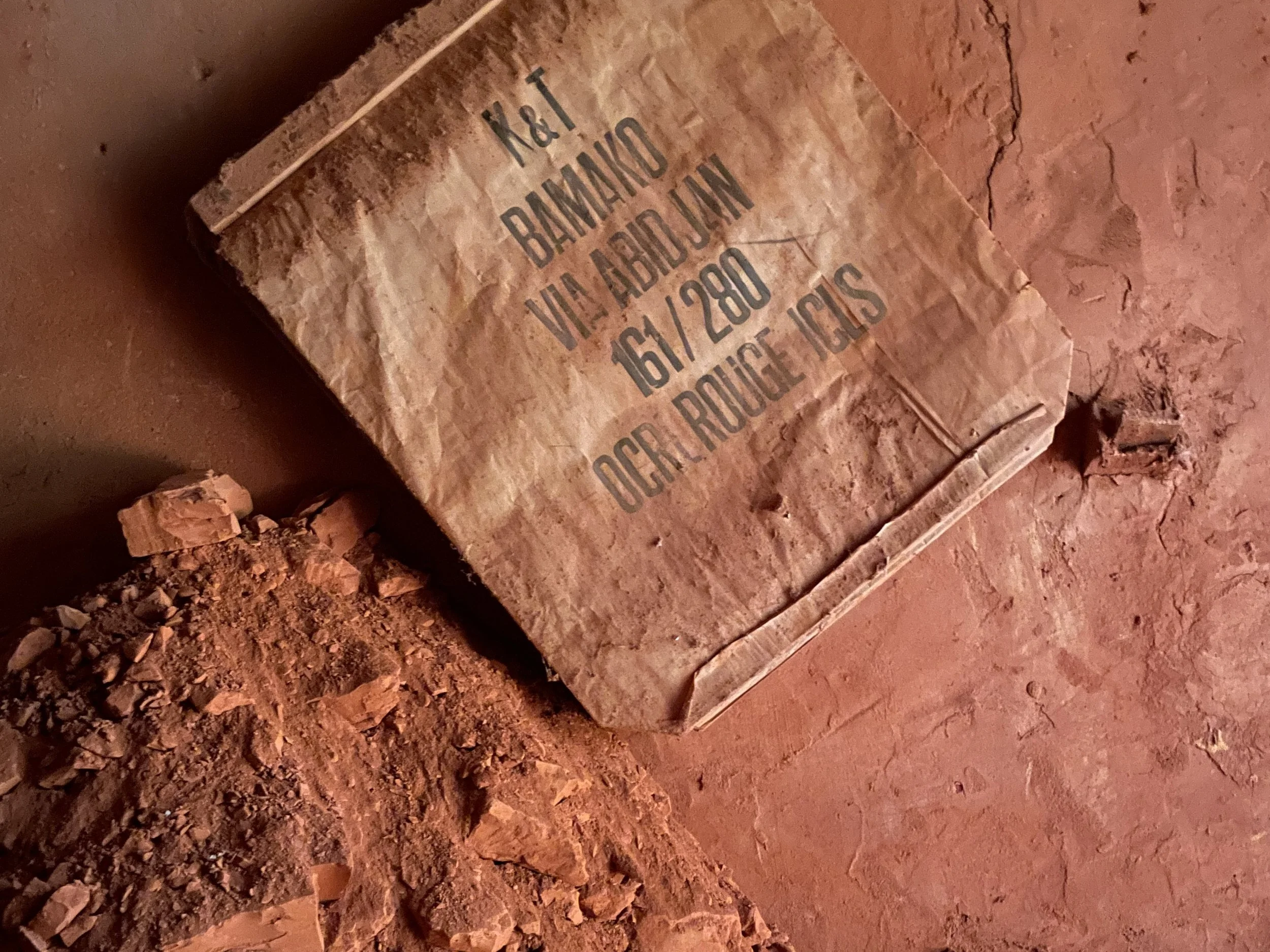
I learnt about the nuances of the earth colours and their geological makeup at the Écomusée de L’Ocre in Roussillon. I read about the miners from the 1920s who lived and breathed the ochre dust. The red and yellow mill rooms reflected the strength of these natural pigments with the dust impregnating every inch of the machines, floors and walls. The worn, frayed and disintegrating canvas chutes that the ochre powder passed through during processing were like hanging sculptures for me. Beautiful in their worn and coloured surfaces, they also played their part in the story of the miners and the challenges they faced in processing the ochres for industrial use.
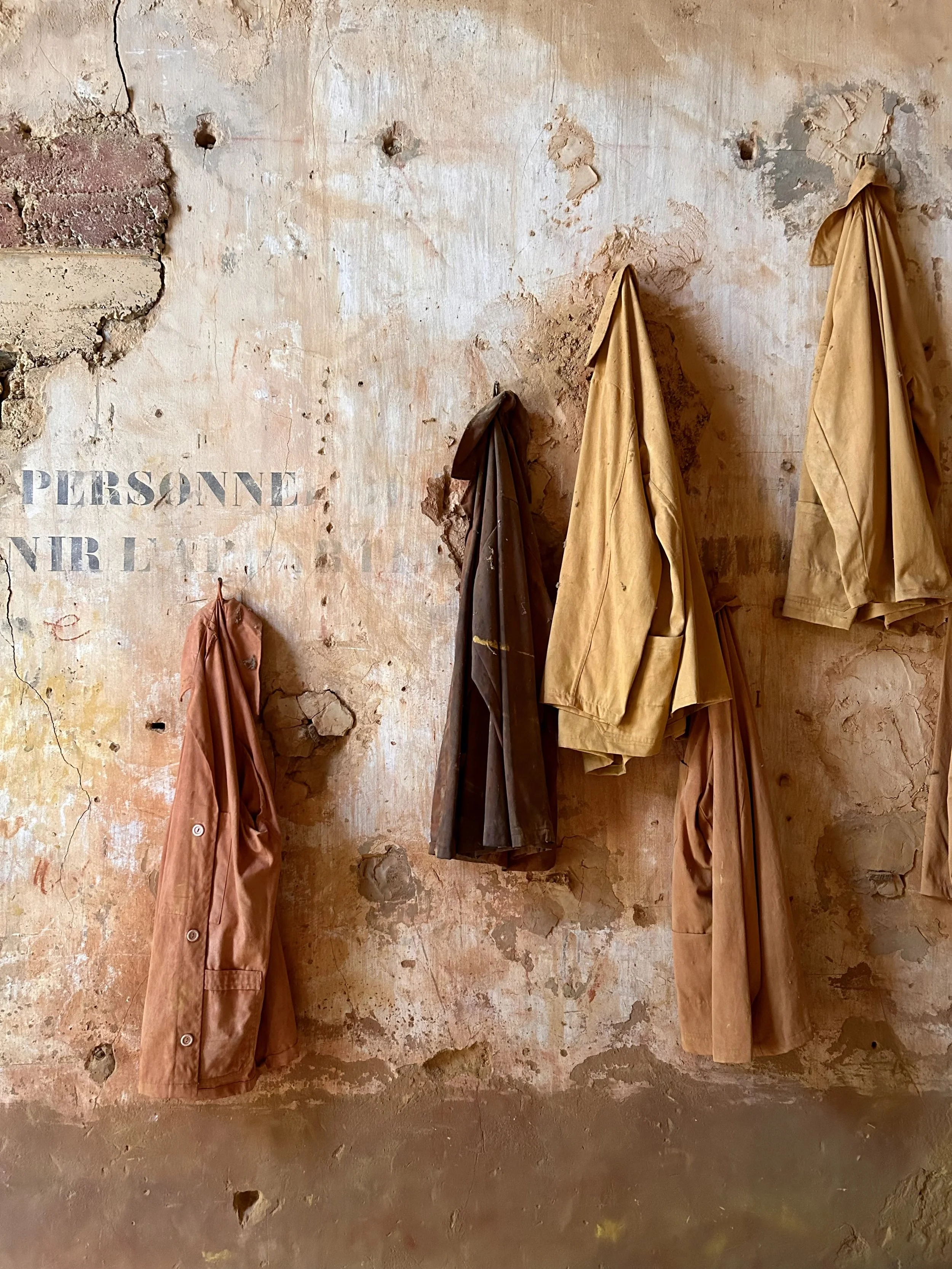
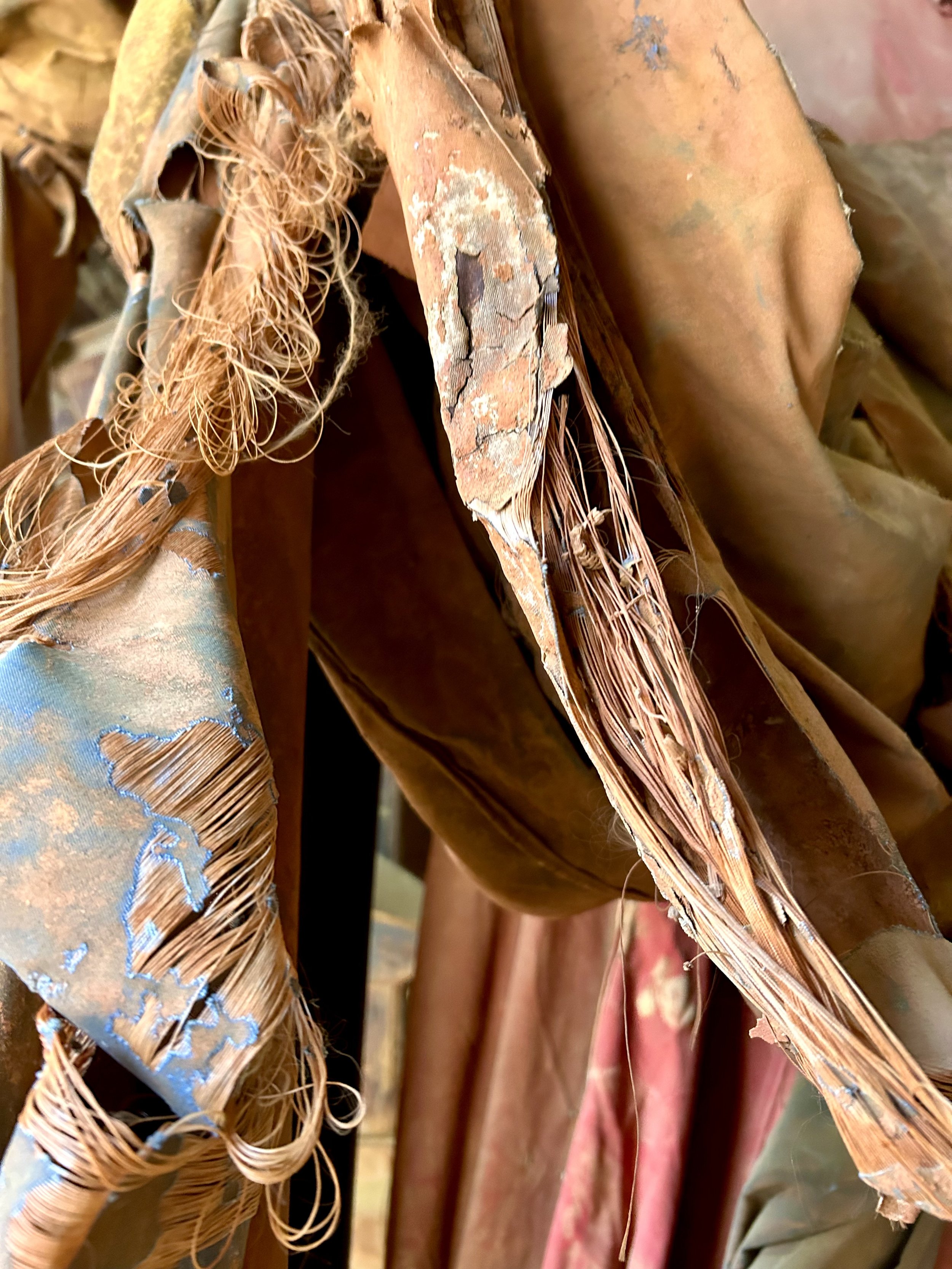
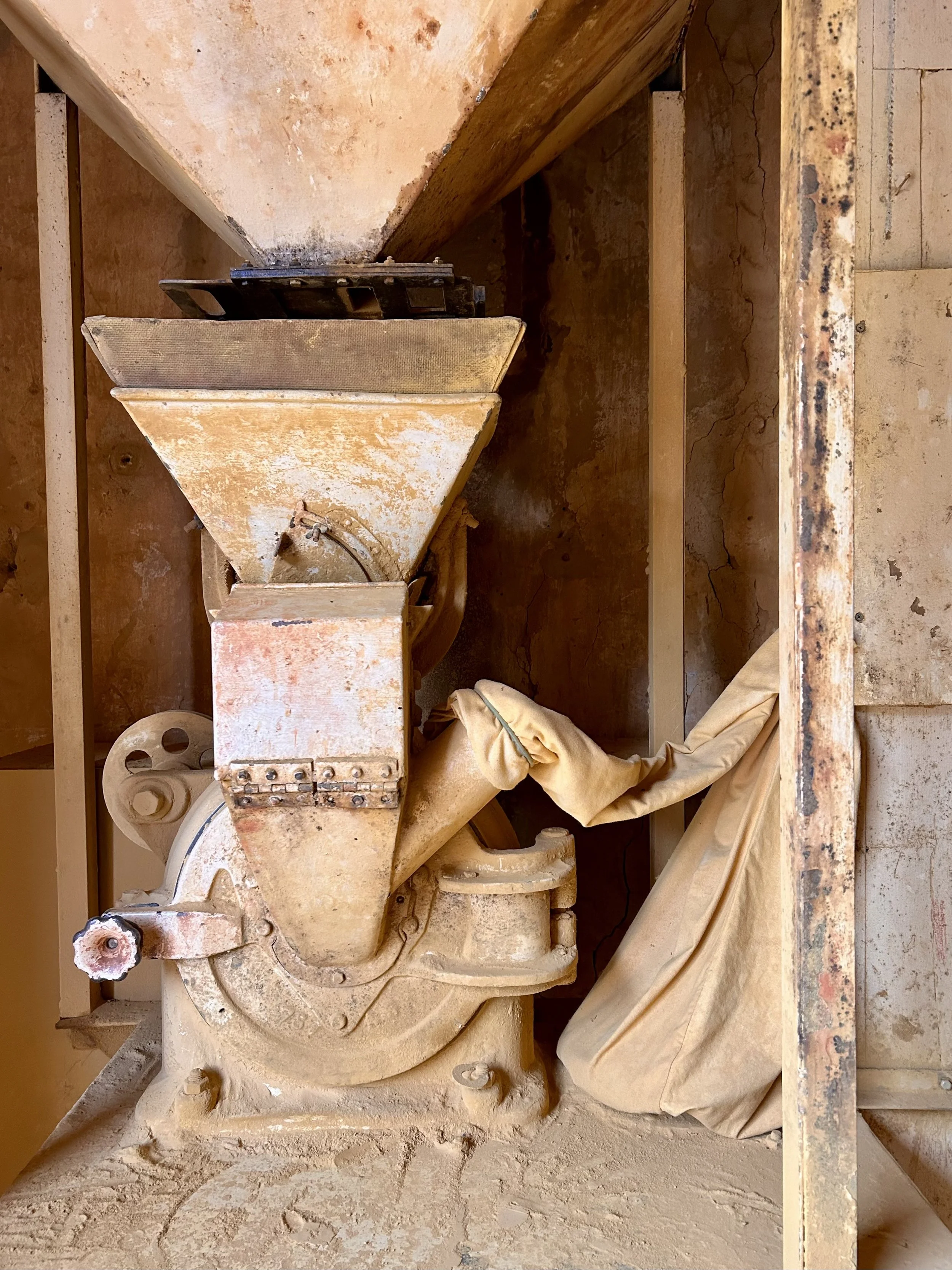
Getting closer to colour
Collecting and recording colour in the Luberon was a way of helping me to deepen my understanding of the more earthy palette I’ve been starting to work with. I began to wonder how much our experience of a place is shaped by colours and whether these colours tell us more about its identity than we realise.
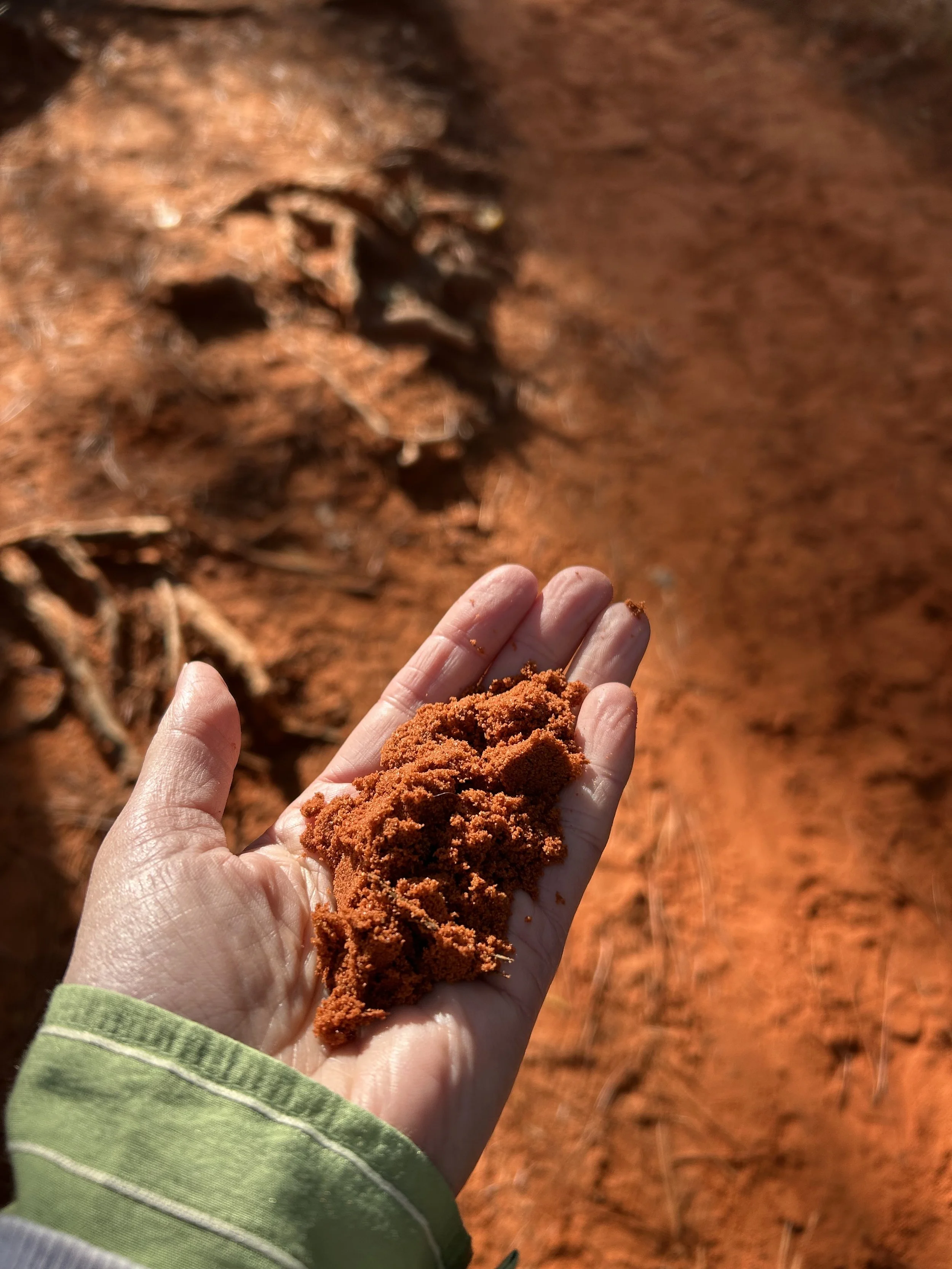
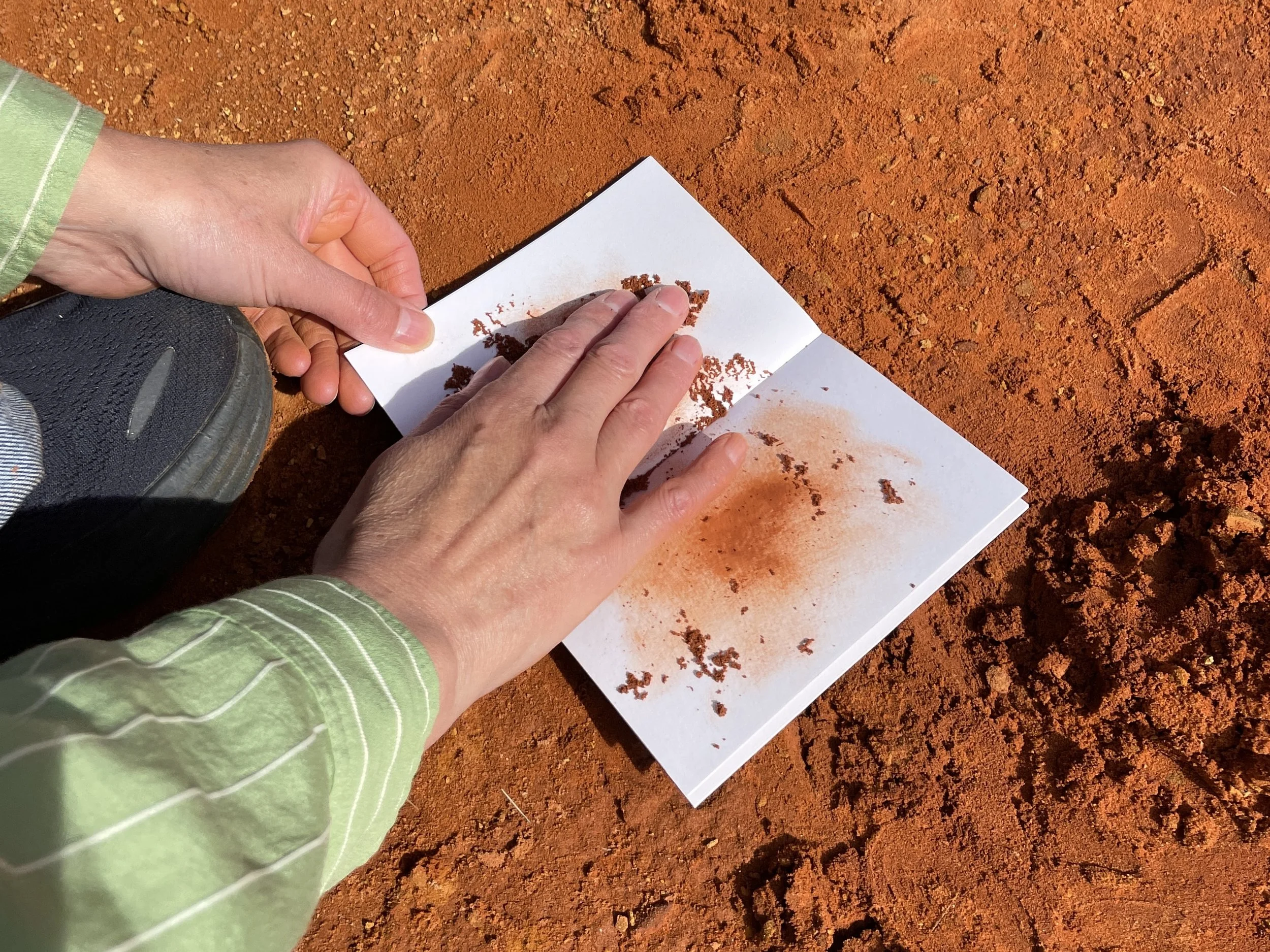
I always record with my camera when I travel but I wanted to capture colour not simply in a visual way but to actually touch the colour at its source. I wanted to understand how the ochre landscape has shaped the identity of this part of the South of France.
As I held the ochre sand in my hands and rubbed it into the pages of my sketchbook, I thought about the human history of these colours. Walking on the ochre earth helped me step back from the painted architecture of the villages and see the connection to the landscape: the colours of the buildings are rooted in the soil they stand on.
When I return to my studio and use these colours, I will have a different perspective that makes me ask the question: am I painting something that comes from the landscape or the architecture? The identity of the places I’ve been recording and responding to in my work is tied up in both. Colour is the land and colour is the place, the atmosphere and the memory.
Taking colour back to the studio
Before this trip I had started gravitating towards ochres as a way of responding to my experience of the South of France and my trip to Marrakech. These colours felt synonymous with heat, warmth, stones, walls and the dust of the dry climates. They seemed to represent the visual identity of the places I had visited. Now, having seen the ochre mines and vast expanses of coloured cliffs, I recognise that these colors have a more physical presence and carry a sense of time.
This trip has given me a better understanding of how the buildings in the South of France are connected to their surroundings. They seem to melt into the landscape in a way that the buildings don't where I live in Devon. I’m excited now to return to the studio and see what will emerge from this new research. I don't think my palette will change dramatically but I think this has given me a desire to explore the nuances of colour I've seen, from muted yellows to the deepest reds singing alongside the soft greens of the landscape and painted shutters. .
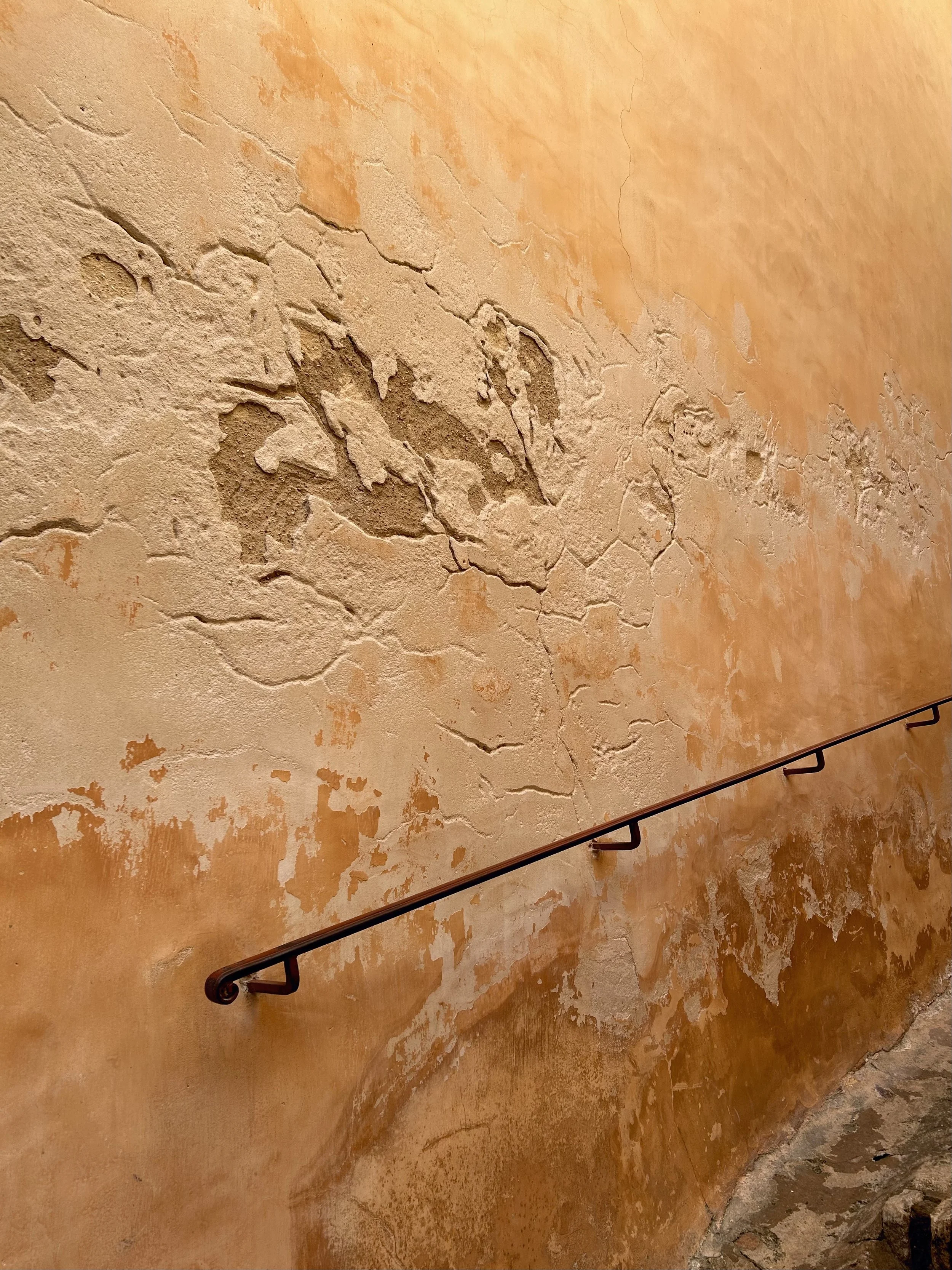
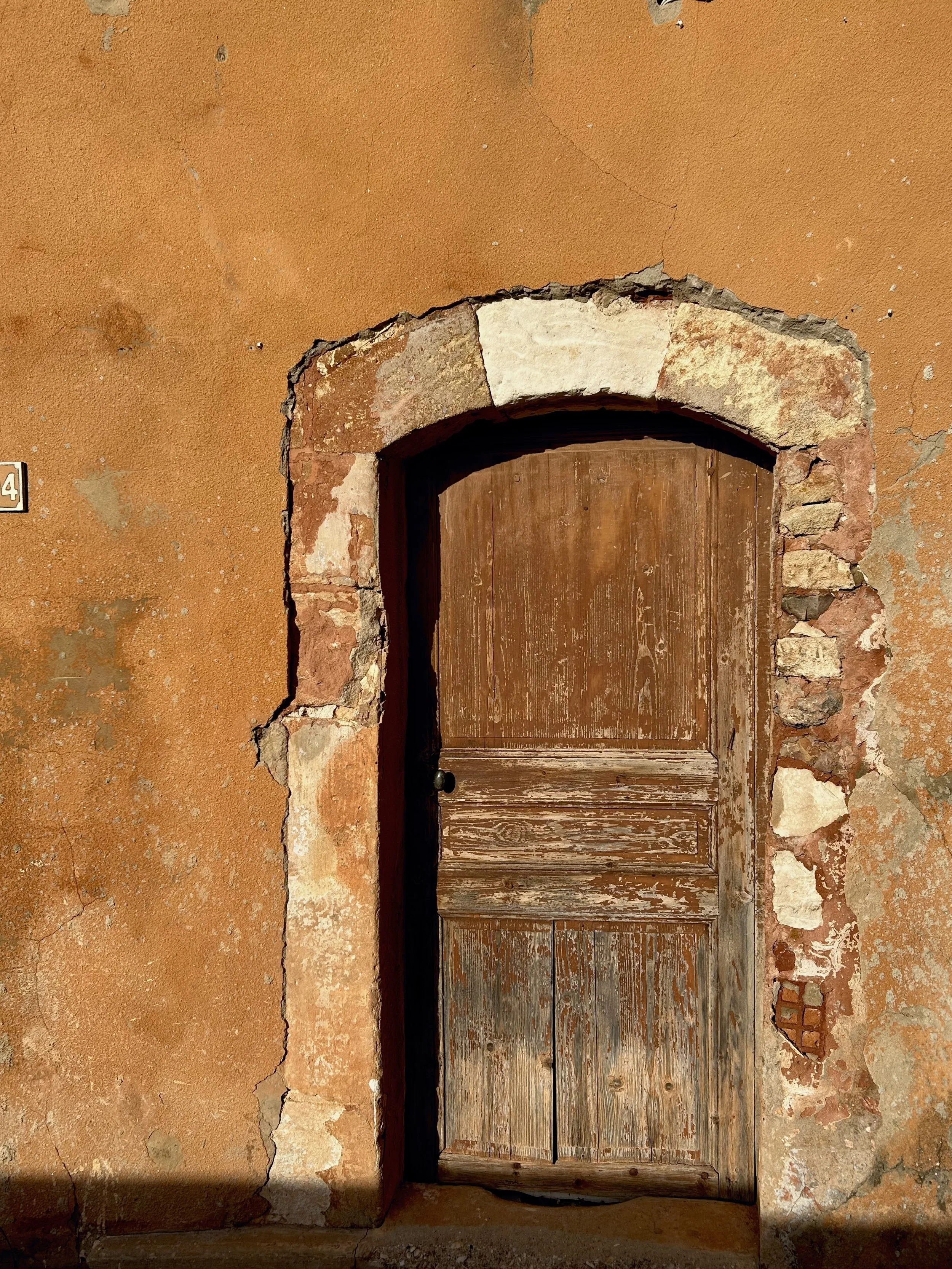
I will undoubtedly continue to respond to the beautiful old weathered walls I’ve photographed on this trip. But now there will also be a sense of responding to the landscape itself. I am intrigued by this idea that I can be making work in response to both the built environment and the landscape at the same time: the colours of one influencing the other, creating a harmony that contributes to the identity of a place. In Marrakech, the ‘Rose City’, I recognise a similar relationship: the build environment grew out of the red ochre landscape that surrounds it.
I’ve come home with natural pigments from the Roussillon museum and soil picked up by the side of the road. I'm looking forward to experimenting with them in the studio and want to discover both how I can use them alongside my acrylic paints and what happens when I work directly with these earth colours. Having now seen where the colours come from, I’m curious to see whether the connection between colour, material and place will influence my work in ways I hadn't anticipated.